


Irish castle dungeons are among the most atmospheric spaces a heritage traveler can enter, but they are also among the easiest to misunderstand. Across Ireland, some castles contain documented prison rooms, others have chambers traditionally called dungeons, and still others preserve dark basements that may never have confined anyone. Learning to tell the difference reveals how power, punishment and politics operated behind castle walls.
A meaningful dungeon tour does more than lead you down a narrow stair. It compares architecture with surviving records, asks who controlled the castle, and considers why a prisoner might have been held there.
What Were Irish Castle Dungeons?
The popular dungeon is an underground maze filled with chains and instruments of punishment. Most Irish castles offer a less dramatic but more revealing reality. A place of confinement might be a small room inside a gatehouse, a secure chamber in a tower, a basement vault or a space later adapted for holding prisoners.
The word “dungeon” also creates confusion because it developed from the same linguistic root as “donjon,” meaning a castle’s principal tower or keep. A medieval reference to a donjon does not necessarily describe an underground prison. Modern signs and guidebooks may also use “dungeon” for a room whose original purpose remains uncertain.
An oubliette is a more specific type of chamber, normally reached through an opening above rather than a conventional doorway. Such spaces are often described as places where captives were dropped and abandoned. However, a difficult-to-reach chamber could also have served as storage, a secure treasury or another specialized space. Architecture can suggest a use, but it does not always prove it.
There was no single dungeon design used throughout Ireland. Anglo-Norman strongholds, later tower houses and castles adapted for government or military use developed under different circumstances. Their prison spaces varied accordingly.
How Can You Tell a Dungeon from a Cellar?
A cold, windowless basement feels convincing, but atmosphere is not evidence. Historians and archaeologists look for several kinds of information before identifying a prison.
The room’s access is important. A strong door, controlled entrance, barred opening or overhead access may support an interpretation of confinement. Its position can matter too. A chamber near a gatehouse could be watched by guards, while a room deep inside a private tower house might have been intended for storage or security.
Fixtures require care. An iron ring set into a wall might have restrained a person, tethered an animal or secured equipment. Drainage channels may show how water or waste left a chamber, but they do not prove that prisoners occupied it. Small windows and thick walls were common defensive features throughout a castle, not features reserved for cells.
Written evidence is often more persuasive. Castle accounts, court papers, government correspondence, chronicles and biographies may record a named captive or payment for guarding prisoners. Even then, a document may identify the castle without revealing the exact room.
The safest interpretation combines physical evidence, historical records and the findings of the organization responsible for the site. When the evidence remains incomplete, “possible prison chamber” is more accurate than “medieval dungeon.”
Prisoners, Hostages and Power in Irish Castle Dungeons:
Castles were residences and defensive centers, but they could also serve as administrative headquarters. The person controlling a castle might command soldiers, collect revenue, protect a strategic crossing or enforce authority over the surrounding district. Confinement was one expression of that power.
Captives did not form a single class. They could include military prisoners, political opponents, suspected criminals, debtors or valuable hostages. A noble hostage might be held to secure a family’s obedience or strengthen a political negotiation. Rank could affect accommodations, food, freedom of movement and access to servants or visitors.
Ireland’s political landscape also changed across the centuries. Gaelic lordships, Anglo-Norman territories, English royal administration and later British government did not operate one continuous prison system. Local practice, political status and the period all affected why and how someone was confined.
That distinction matters when comparing castle imprisonment with Ireland’s older legal traditions. Ireland’s Brehon laws formed a learned Gaelic legal system that often emphasized kinship, status, compensation and sureties. Castle detention belonged to a different and changing political environment. Medieval Ireland neither relied on one uniform prison system nor existed entirely without confinement.
Dublin and Trim: A Tour of Castle Power
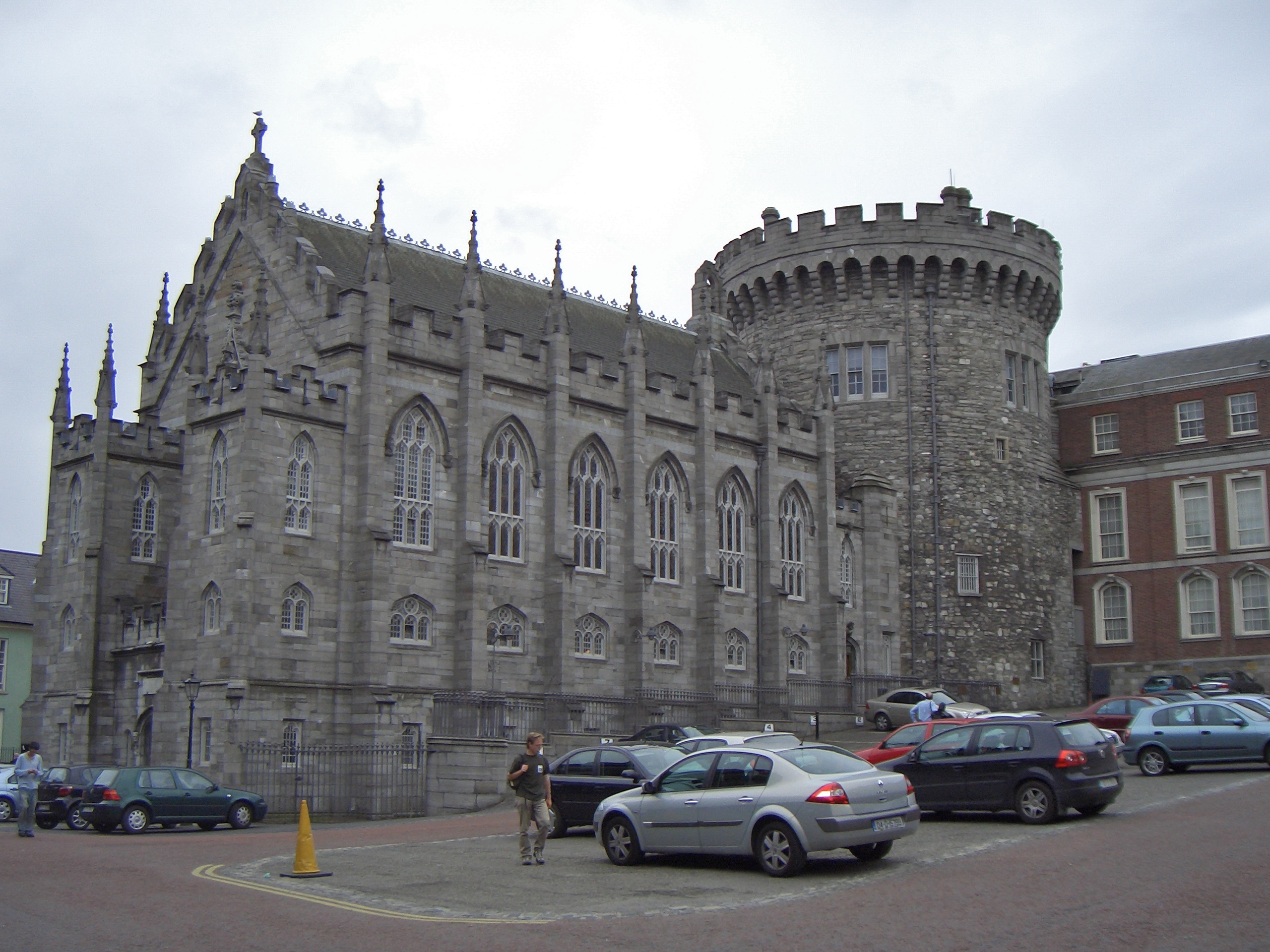
Dublin Castle
Dublin makes a useful first hub because it demonstrates how easily underground architecture can be mislabeled. Construction of Dublin Castle began in the early thirteenth century, and the complex became the center of English, and later British, administration in Ireland. Beneath the later buildings, visitors have been able to see part of the medieval defensive wall and the base of a tower in the undercroft.
The undercroft is surviving medieval fabric, not a confirmed public dungeon. Its value lies in showing the scale and position of the earlier fortress. Dublin Castle certainly held prisoners during its long history, including the Gaelic leader Hugh Roe O’Donnell before his celebrated escape in the 1590s. No surviving evidence identifies the undercroft seen by visitors as O’Donnell’s cell.
There is an important temporary restriction for travelers in 2026. The official visitor information states that Dublin Castle is closed to the public from May 5 through December 31, 2026, while the complex accommodates activities connected with Ireland’s presidency of the Council of the European Union. Check the current status before including the undercroft in a later itinerary.

Trim Castle
Trim Castle in County Meath is the stronger second stop. Its monumental keep and surrounding defenses make the organization of Anglo-Norman power easy to see. Heritage Ireland records that Richard II visited Trim in 1399 and left Prince Hal, the future Henry V, as a prisoner in the castle. The official account confirms the confinement, but it does not identify an underground dungeon as the place where he was held.
Trim offers an excellent lesson in evidence. A named prisoner is documented, while his precise accommodations remain uncertain. The official Trim Castle history confirms the prisoner account but does not identify a particular cell.
Travelers who want broader context can use the site’s guide to Irish castles to compare Trim with other Norman, Gaelic and later fortified residences.
Cork and Tipperary: The Strongest Irish Castle Dungeon Route

Barryscourt Castle
The most convincing cluster begins around Cork. Barryscourt Castle, near Carrigtwohill, is a restored tower house associated with the Anglo-Norman Barry family. Its dungeon is not merely a nickname applied by an outside travel writer. Heritage Ireland identifies a ground-floor dungeon and a drop-hole from the second floor through which prisoners were said to have been lowered.
The official account of Barryscourt Castle makes it the strongest anchor for this journey. You encounter the chamber as part of a complete building that also contained domestic and defensive spaces. The dungeon was not an isolated feature. It existed within a residence where authority, hospitality, protection and coercion occupied the same structure.

Blarney Castle
Blarney Castle, west of Cork city, offers another space presented to visitors as “The Dungeon.” The castle’s own interpretation places it below a lookout tower and describes several openings around the feature. No documented famous prisoner or specific punishment is attached to the chamber in the available official account. Its historical value lies in comparing Blarney’s interpretation with Barryscourt’s more explicit description of a dungeon and drop-hole.

Cahir Castle
Cahir Castle provides a practical third stop in County Tipperary. Built on a rocky island in the River Suir, it became a Butler stronghold and survived major sieges. The Office of Public Works describes it as a leading example of thirteenth-century defensive design, but its primary visitor page does not identify a particular room as a documented prison.
That does not weaken Cahir’s place in the route. It helps you see the wider system that made confinement possible: guarded entrances, towers, enclosed wards and control of a strategic river position. A castle dungeon only makes historical sense when viewed as part of the lordship and defensive authority surrounding it.
Barryscourt, Blarney and Cahir work best as a multi-day route rather than three hurried interiors. Access conditions, guided tours and opening schedules can change. The broader step-by-step guide to planning an Ireland trip can help you allow realistic driving time and avoid overloading a sightseeing day.
Kilkenny, Roscrea and the Southeast: Possible Oubliettes and Tower-House Cells
Kilkenny offers a third Irish castle dungeon hub, although Kilkenny Castle does not provide a confirmed dungeon stop. The castle was the principal seat of the Butler family for almost 600 years, and its surviving interiors reflect centuries of rebuilding and residential use. It supplies the political and family context for the smaller fortified sites around it.

Clara Castle
Clara Castle, east of Kilkenny city, presents a more intriguing question. Heritage Ireland describes a concealed mural chamber behind what appears to be a garderobe, or medieval toilet recess. The chamber may have served as storage or as a dungeon cell known as an oubliette. Its original purpose remains uncertain. Access is by appointment through the caretaker, so arrange a visit in advance rather than arriving without a booking.
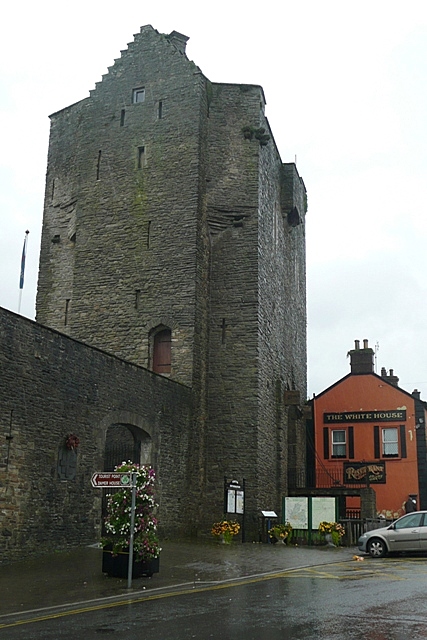
Roscrea Castle
Northwest of Kilkenny, Roscrea Castle provides another interpreted dungeon feature. Heritage Ireland’s visitor material identifies a basement dungeon inside the main entrance. The wider complex also includes the medieval castle, eighteenth-century Damer House, gardens and the Black Mills. That combination lets you compare how one site changed from a fortified center into a place with military, educational and civic uses.

Ballyhack Castle
Ballyhack Castle in County Wexford can extend the route toward Waterford Harbour. This five-story tower house, associated with the Knights Hospitallers, preserves steep stairs, low doorways and defensive features. Visitor descriptions have long identified a dungeon among its attractions, but the principal official page provides less detail about the evidence for that room than Barryscourt’s account does.
In 2026, Ballyhack’s published season runs from May 7 through August 26, Saturday through Wednesday. Because access begins with stairs and the upper levels require steep stone steps, verify both opening days and physical access immediately before visiting.
For a deeper understanding of the landscapes surrounding these structures, Ancient Ireland and Scotland for Heritage Travelers explains how fortified sites fit into broader patterns of settlement, warfare, belief and memory.

How to Plan an Irish Castle Dungeon Tour
Choose one regional hub rather than collecting isolated castles across the island. Dublin works for administration and documented political imprisonment. Cork offers the strongest concentration of visitor-interpreted dungeon spaces. Kilkenny provides a thoughtful route through tower houses and uncertain chamber functions.
Check official information shortly before traveling. Dungeon areas may involve steep spiral stairs, uneven floors, low ceilings or guided access. Seasonal castles can close outside summer, and a room normally discussed online may not be open during every visit.
Most importantly, read labels carefully. “Traditionally called,” “possibly used” and “documented as” are not interchangeable phrases. Those distinctions turn a dark room into a meaningful historical site.
Reading Power in the Stonework
Irish castle dungeons matter because they bring visitors close to the human consequences of power. Yet their strongest stories do not depend on exaggerated darkness or invented suffering. A documented prisoner at Trim, a confirmed dungeon feature at Barryscourt and a possible oubliette at Clara Castle each tell a different kind of story.
The walls alone rarely provide every answer. When architecture is read beside records, political history and honest uncertainty, these chambers reveal how authority reached from Ireland’s great conflicts into individual lives.
Related Articles
Compare these stops with the broader guide to Ireland’s most useful castles for genealogy travelers. For the larger historical landscape, explore ancient Ireland and Scotland through their monuments and fortified places. If this journey will be part of a longer vacation, use the beginner’s guide to planning an Ireland trip to organize regions and travel days. Readers interested in the legal world surrounding medieval communities can also examine how Brehon law connected kinship, status and compensation.
About the Author
Terry Donlan is the founder of Irish Scottish Roots and has researched his Irish and Scottish family history since 1985. He has made six research trips to Ireland and Scotland. He writes about genealogy, heritage travel, historical records, and the people and places that shaped Irish and Scottish family stories.
Infographics and images in this article were created using Gemini NotebookLM. Other images are identified by their accompanying credits.
Discover more from Irish Scottish Roots
Subscribe to get the latest posts sent to your email.


